Try Wing Surfing
Key Summary
Wing surfing is one of the fastest-growing water sports in the world and was only invented around 10 years ago.
You don't need a hydrofoil to get started. Winging on a standard board is the recommended first step.
Wind knowledge from other water sports transfers over well. The technique, less so.
Core and arm strength matter more than you'd expect, especially when the wind drops.
It's more accessible than windsurfing in terms of kit, and slightly less technical, which is nice.
The hydrofoil version is the next step up, but comes with significantly more cost, speed, and complexity.
How It Started
A group of us had gone down to Poole for a windsurfing trip, but the tide was out and the conditions weren't great.
The instructor suggested we try wingsurfing for the afternoon instead. None of us had tried it before, and most of us had barely heard of it.
Wing surfing, or wing foiling as it's more commonly known, is a relatively new sport. It was invented around 10 years ago and really gained popularity within the water sports community during lockdown, when people were looking for ways to get out on the water solo without needing a team or a club around them.
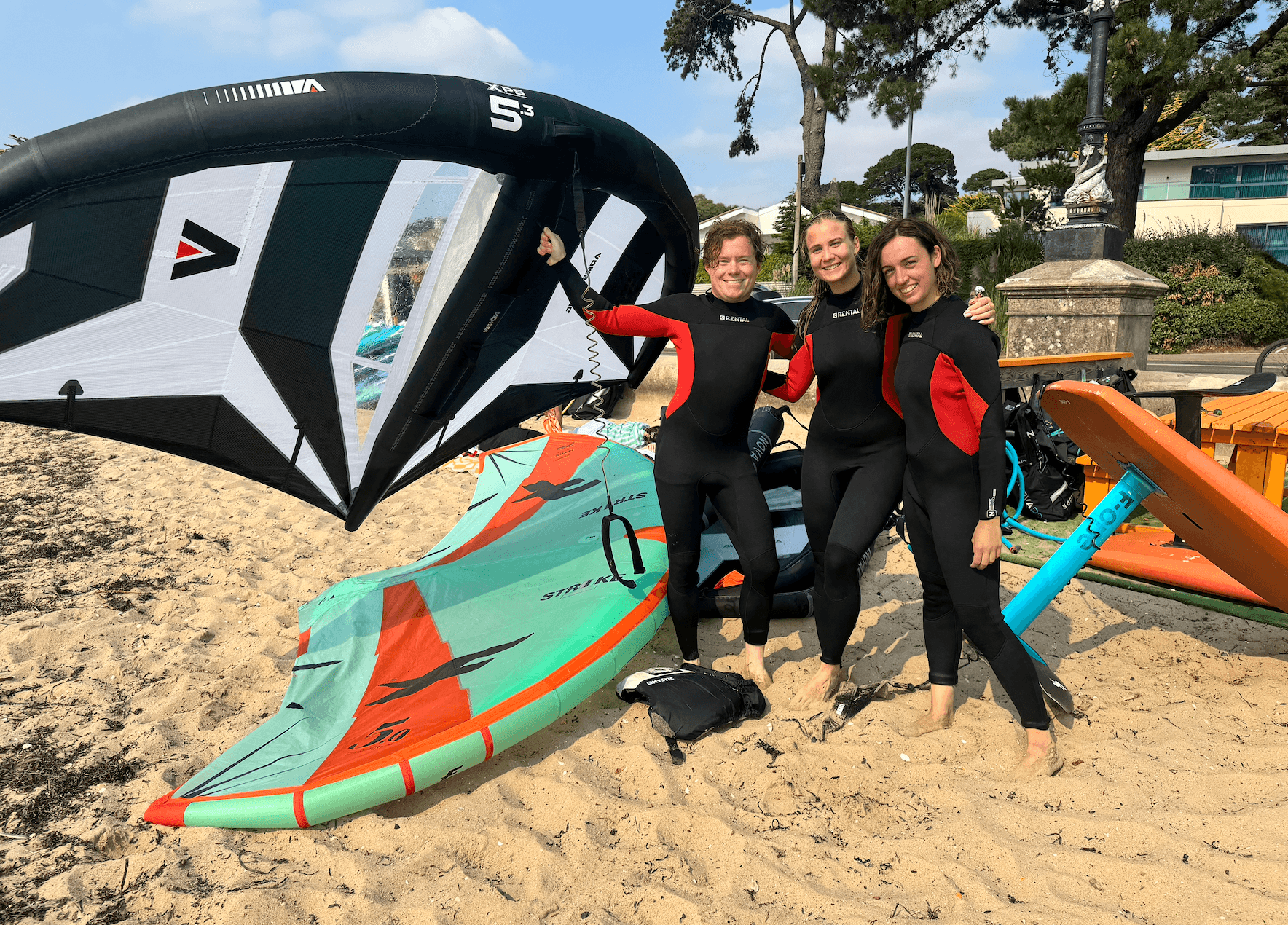
The basic version, which is what we did, involves holding an inflatable wing above your head to catch the wind while standing on a board. Unlike windsurfing, where the sail is attached to the board via a mast, with wing surfing you are the connection point. You hold the wing with both hands and can move it through 360 degrees, adjusting the angle to find the wind and control your speed and direction.
The Experience
The session was a 2 hour introduction, and all of us managed to get moving and confidently turn by the end of it. Given none of us had tried it before, that felt like a pretty good outcome.
The first thing you learn is how to hold and control the wing on land before you get anywhere near the water. The wing is inflatable and has handles positioned along a central strut. You hold it above your head and use the angle to either catch the wind or let it pass through. Think of it like trying to catch as many ping pong balls as possible. The more surface area you present to the wind, the more power you generate.
Getting that balance consistently right was the hardest part. The moment the wind dropped, the wing became heavy and unwieldy, and you had to work hard with your arms and core to keep it up and in position. Anticipating gusts before they arrived was something that took time to develop a feel for.
Those with windsurfing experience in the group picked it up noticeably faster, particularly when it came to reading the wind and positioning themselves relative to where they wanted to go. That said, everyone got there by the end. The technique is different enough from windsurfing that there was still plenty of trial and error involved, regardless of background.
One thing that genuinely surprised me was how physical it was. The wing is light when the wind is in it, but the moment it drops you're holding a large, awkward inflatable above your head and waiting for the next gust. Your arms and core feel it in a way you don't anticipate going in.
We did the basic winging version rather than the full hydrofoil version, where the board lifts out of the water entirely. Hydrofoiling is the next step up, but it requires specialist equipment and a support boat nearby for safety, which makes it significantly more expensive and logistically complex. As a starting point, winging on a standard board was more than enough to get a proper feel for the sport.
What I Took Away
Wing surfing is genuinely fun, and I'd go back.
It's one of those sports that feels new in a way that's hard to describe. The closest comparison I have is windsurfing, but even that doesn't quite capture it. Being the connection point between the wing and the board, with 360 degrees of movement available to you, gives you a different kind of freedom to anything I've tried on the water before.
My existing windsurfing knowledge definitely helped. Understanding wind direction, how to read a gust and how to position yourself relative to where you want to go. But once you're on the water, the muscle memory you've built elsewhere doesn't save you. You still have to figure it out.
The hydrofoil version is something I'd be curious to try. Watching it, the speed and the feeling of flying above the water looks genuinely exciting. Whether I'd need to come to it via more wingsurfing first or could jump straight in, I'm not sure. Either way it's on the list.
For now, windsurfing is probably still my favourite. There's something about harnessing the wind through a fixed sail that I love and that wing surfing doesn't quite replicate. But as a spontaneous afternoon activity that nobody in the group had planned for, it exceeded every expectation.

Special Thanks
To the instructor in Poole, for suggesting it when the windsurfing conditions fell through. Best plan B of the trip.
To the group, for being up for trying something none of us had heard of and making a slightly chaotic afternoon genuinely brilliant.
Try Wing Surfing
Key Summary
Wing surfing is one of the fastest-growing water sports in the world and was only invented around 10 years ago.
You don't need a hydrofoil to get started. Winging on a standard board is the recommended first step.
Wind knowledge from other water sports transfers over well. The technique, less so.
Core and arm strength matter more than you'd expect, especially when the wind drops.
It's more accessible than windsurfing in terms of kit, and slightly less technical, which is nice.
The hydrofoil version is the next step up, but comes with significantly more cost, speed, and complexity.
How It Started
A group of us had gone down to Poole for a windsurfing trip, but the tide was out and the conditions weren't great.
The instructor suggested we try wingsurfing for the afternoon instead. None of us had tried it before, and most of us had barely heard of it.
Wing surfing, or wing foiling as it's more commonly known, is a relatively new sport. It was invented around 10 years ago and really gained popularity within the water sports community during lockdown, when people were looking for ways to get out on the water solo without needing a team or a club around them.
The basic version, which is what we did, involves holding an inflatable wing above your head to catch the wind while standing on a board. Unlike windsurfing, where the sail is attached to the board via a mast, with wing surfing you are the connection point. You hold the wing with both hands and can move it through 360 degrees, adjusting the angle to find the wind and control your speed and direction.
The Experience
The session was a 2 hour introduction, and all of us managed to get moving and confidently turn by the end of it. Given none of us had tried it before, that felt like a pretty good outcome.
The first thing you learn is how to hold and control the wing on land before you get anywhere near the water. The wing is inflatable and has handles positioned along a central strut. You hold it above your head and use the angle to either catch the wind or let it pass through. Think of it like trying to catch as many ping pong balls as possible. The more surface area you present to the wind, the more power you generate.
Getting that balance consistently right was the hardest part. The moment the wind dropped, the wing became heavy and unwieldy, and you had to work hard with your arms and core to keep it up and in position. Anticipating gusts before they arrived was something that took time to develop a feel for.
Those with windsurfing experience in the group picked it up noticeably faster, particularly when it came to reading the wind and positioning themselves relative to where they wanted to go. That said, everyone got there by the end. The technique is different enough from windsurfing that there was still plenty of trial and error involved, regardless of background.
One thing that genuinely surprised me was how physical it was. The wing is light when the wind is in it, but the moment it drops you're holding a large, awkward inflatable above your head and waiting for the next gust. Your arms and core feel it in a way you don't anticipate going in.
We did the basic winging version rather than the full hydrofoil version, where the board lifts out of the water entirely. Hydrofoiling is the next step up, but it requires specialist equipment and a support boat nearby for safety, which makes it significantly more expensive and logistically complex. As a starting point, winging on a standard board was more than enough to get a proper feel for the sport.
What I Took Away
Wing surfing is genuinely fun, and I'd go back.
It's one of those sports that feels new in a way that's hard to describe. The closest comparison I have is windsurfing, but even that doesn't quite capture it. Being the connection point between the wing and the board, with 360 degrees of movement available to you, gives you a different kind of freedom to anything I've tried on the water before.
My existing windsurfing knowledge definitely helped. Understanding wind direction, how to read a gust and how to position yourself relative to where you want to go. But once you're on the water, the muscle memory you've built elsewhere doesn't save you. You still have to figure it out.
The hydrofoil version is something I'd be curious to try. Watching it, the speed and the feeling of flying above the water looks genuinely exciting. Whether I'd need to come to it via more wingsurfing first or could jump straight in, I'm not sure. Either way it's on the list.
For now, windsurfing is probably still my favourite. There's something about harnessing the wind through a fixed sail that I love and that wing surfing doesn't quite replicate. But as a spontaneous afternoon activity that nobody in the group had planned for, it exceeded every expectation.
Special Thanks
To the instructor in Poole, for suggesting it when the windsurfing conditions fell through. Best plan B of the trip.
To the group, for being up for trying something none of us had heard of and making a slightly chaotic afternoon genuinely brilliant.