Watercolours
Key Summary
A travel watercolour set is one of the best things you can pack for a trip. Lightweight, compact and endlessly useful.
Start with light colours and build up. Going dark first makes it much harder to correct.
Landscapes are easier than people. Start there.
Outlining in pen before (or even after) you paint makes a big difference, especially as a beginner.
Buying watercolour cards in bulk takes the pressure off. Not every painting needs to be good.
Using water from the place you're painting adds something you can't get from a photo.
How It Started
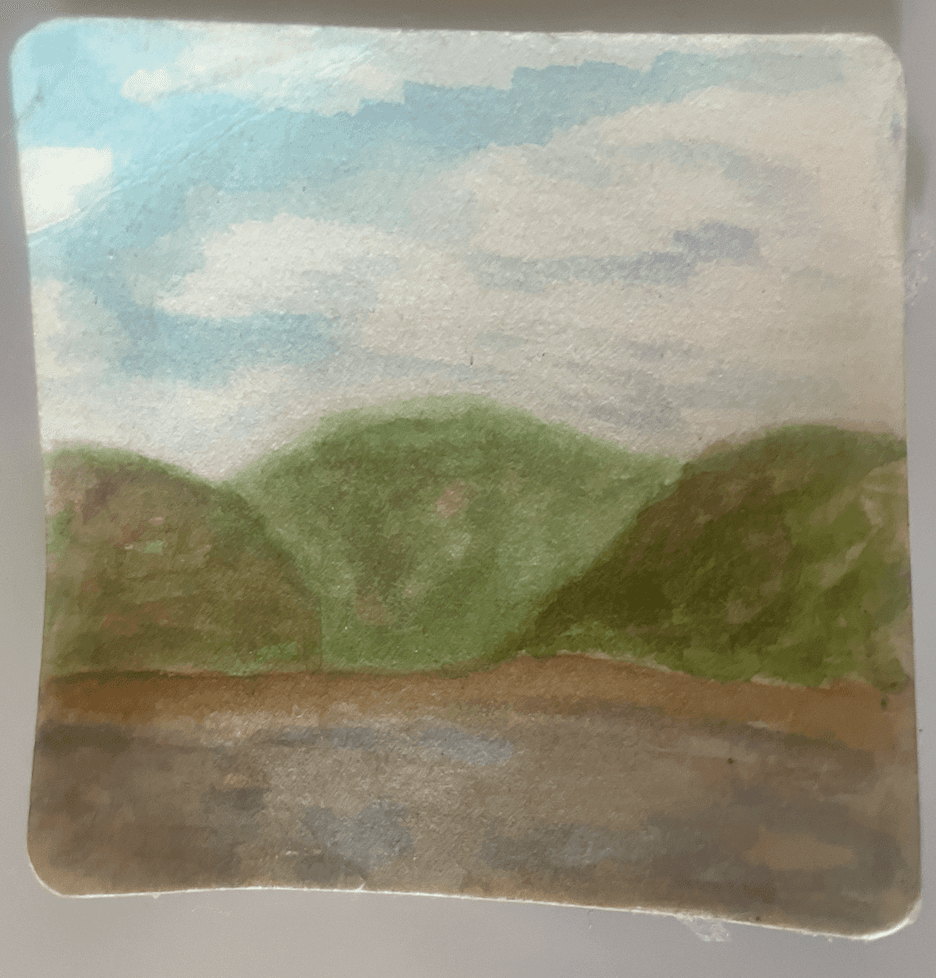
This one started in Scotland, on a beautiful sunny day in the Highlands.
I was volunteering on an expedition with the British Exploring Society, leading a group of young explorers through a week of hiking and camping. During one of the days, one of the young people in our group needed a slower pace, so the team medic and I stayed with her while the rest of the group continued.
The medic had brought along a small travel watercolour set. To make the most of the afternoon, we headed down to a nearby stream and started painting. I don't know quite what I was expecting, but it was one of the most relaxing things I'd done in a long time. Sitting by a stream in the Scottish Highlands, painting the landscape around me, using the water from the stream itself to mix the colours.
I wanted to bring that feeling home with me.
I bought my own travel set shortly after, and it's been with me on almost every trip since.
My first attempt:
The Experience
The first proper outing was a few months later, when I spent a month working from Italy with my friend Ash. We did a lot of hiking, and somewhere between the monasteries and the mountain paths, we started painting.
Ash is a mechanical engineer and has a remarkably good eye. His paintings were detailed and realistic in a way mine weren't, and he taught me two things that changed how I approached it. Start with your lightest colours and build up. And don't be too obvious with the lines.
Mine on the left, Ash's on the right.
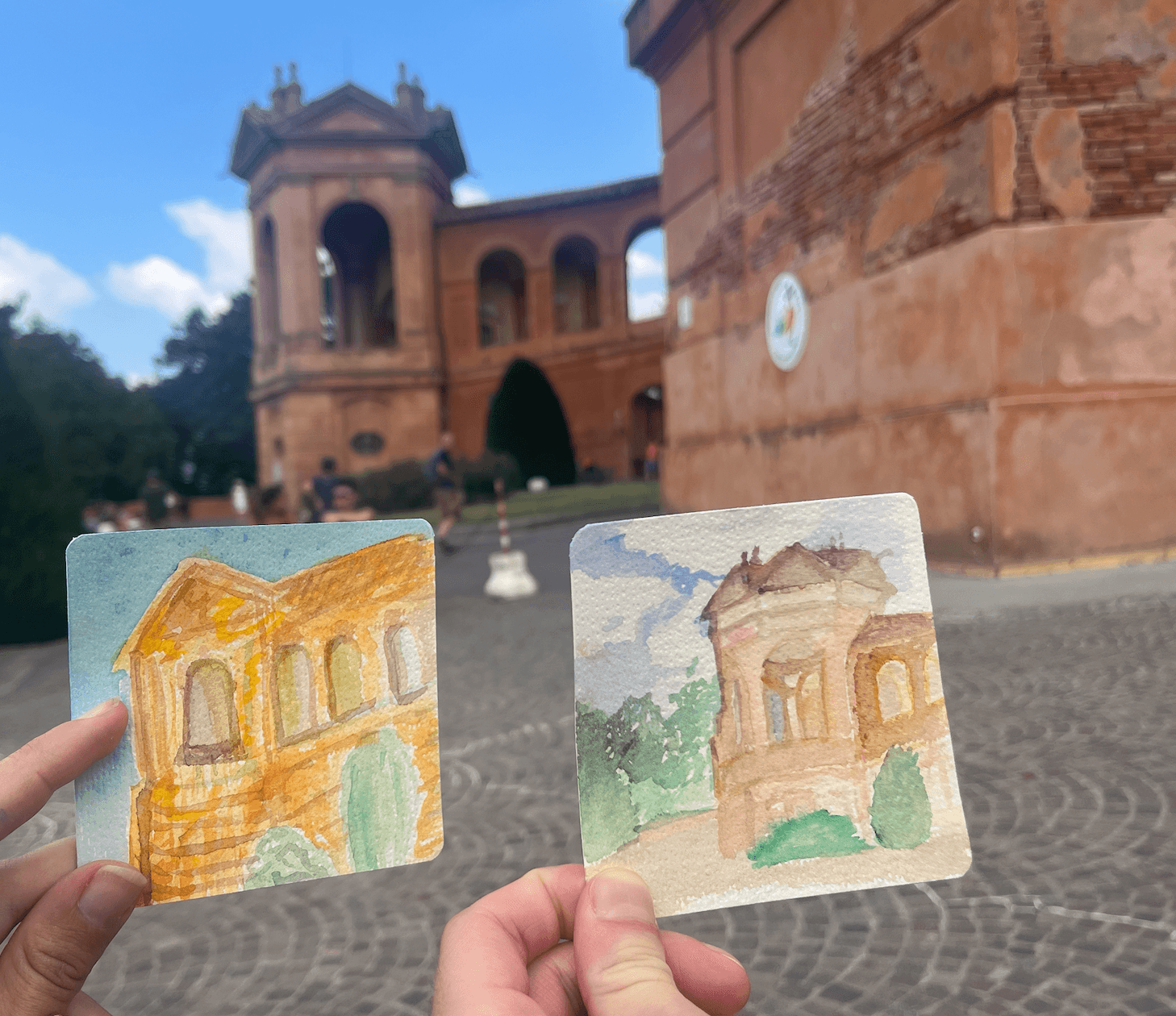
I'd been doing the opposite on both counts. Going in dark and then trying to lighten it, and outlining everything too heavily. Once I adjusted, the paintings started to feel more like watercolours and less like colouring-in.
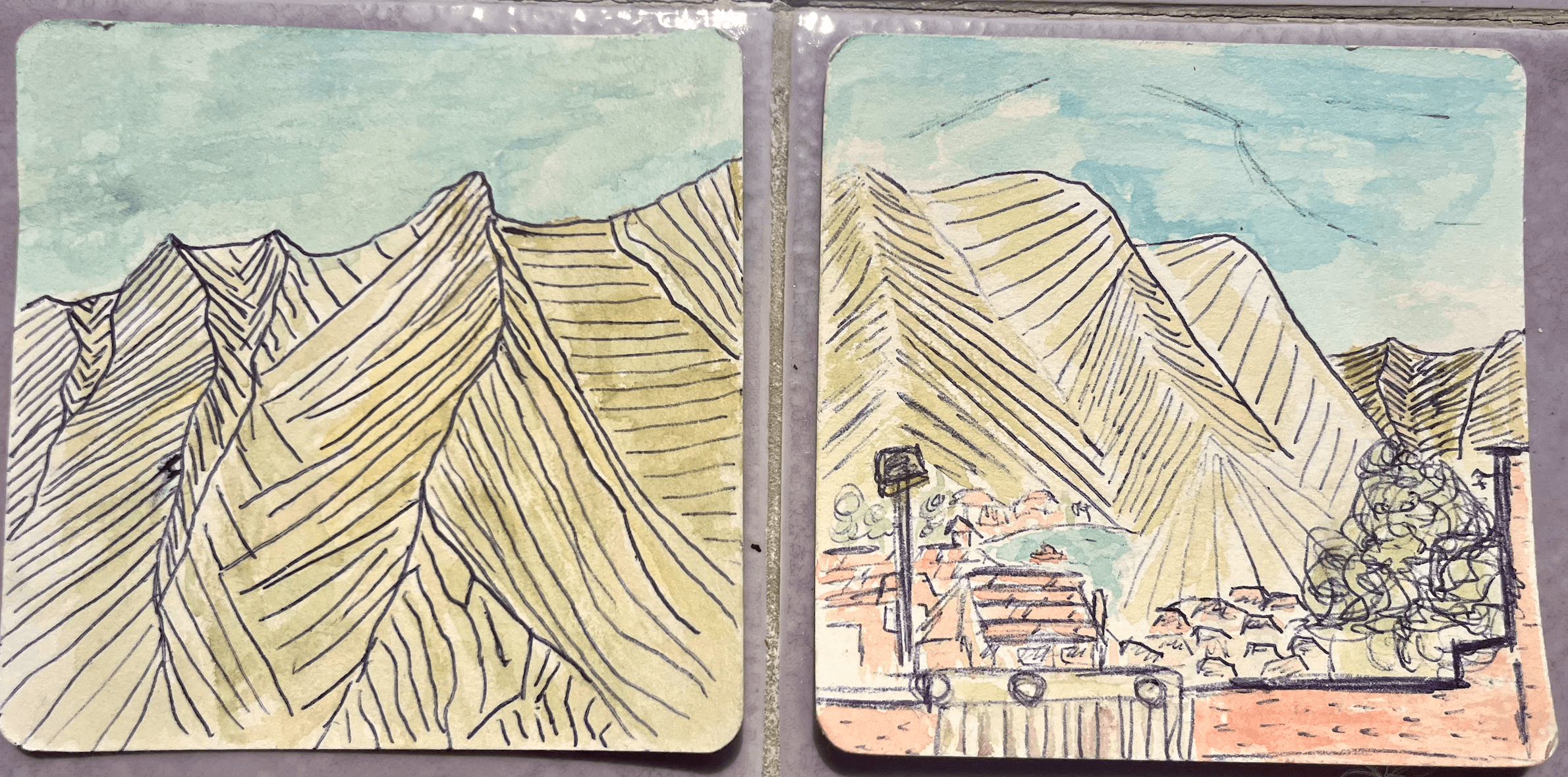
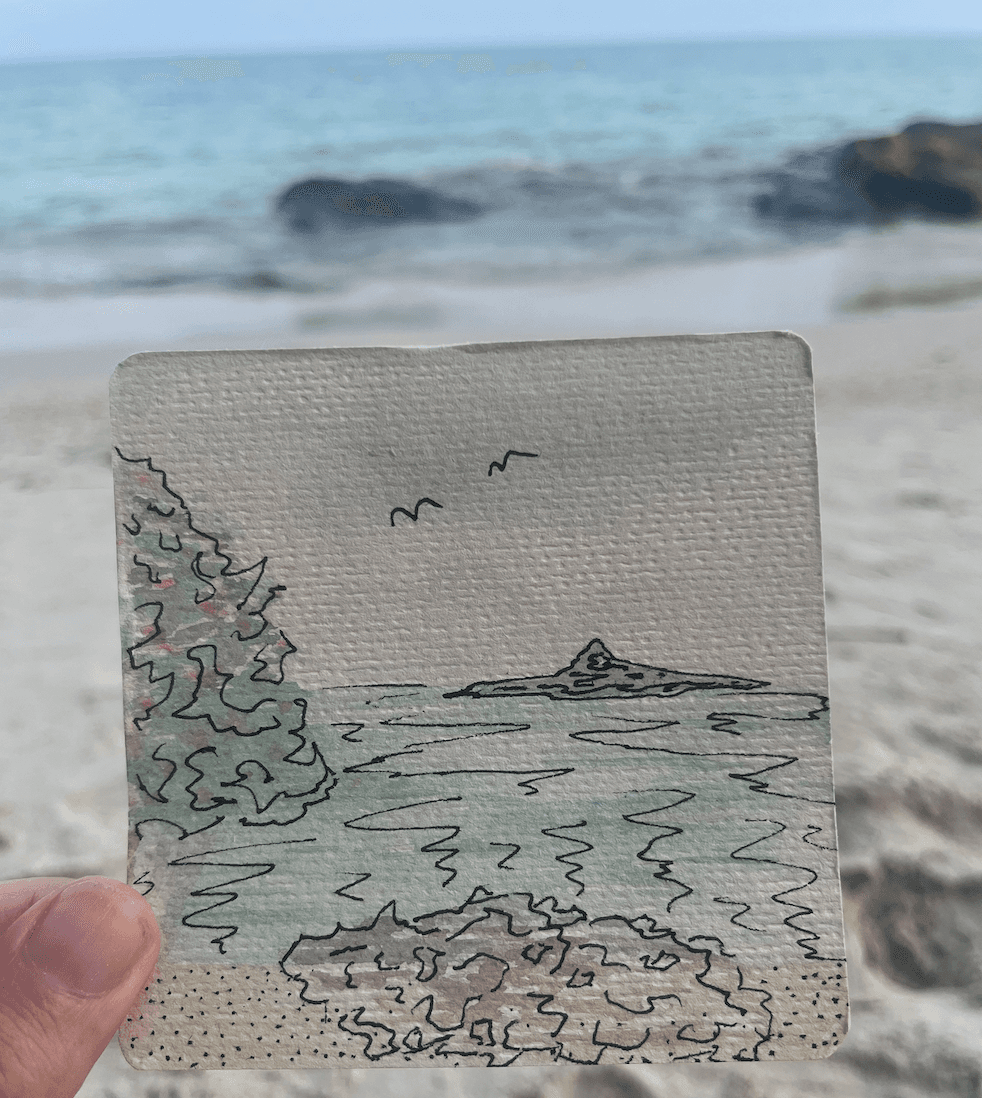
In Montenegro, I tried a different approach entirely. Outlining the scene in pen first and then filling it in with paint. A kind of paint-by-numbers approach that I really liked the effect of. It gave the paintings more structure without losing the looseness that makes watercolours interesting.
One of the things I love most about painting this way is using the water from wherever I am. The stream in Scotland. The sea in Montenegro. The fountain at a monastery in Italy and by the beach in Thailand. It sounds like a small thing, but it adds a layer of memory to each painting that a photograph can't quite replicate.
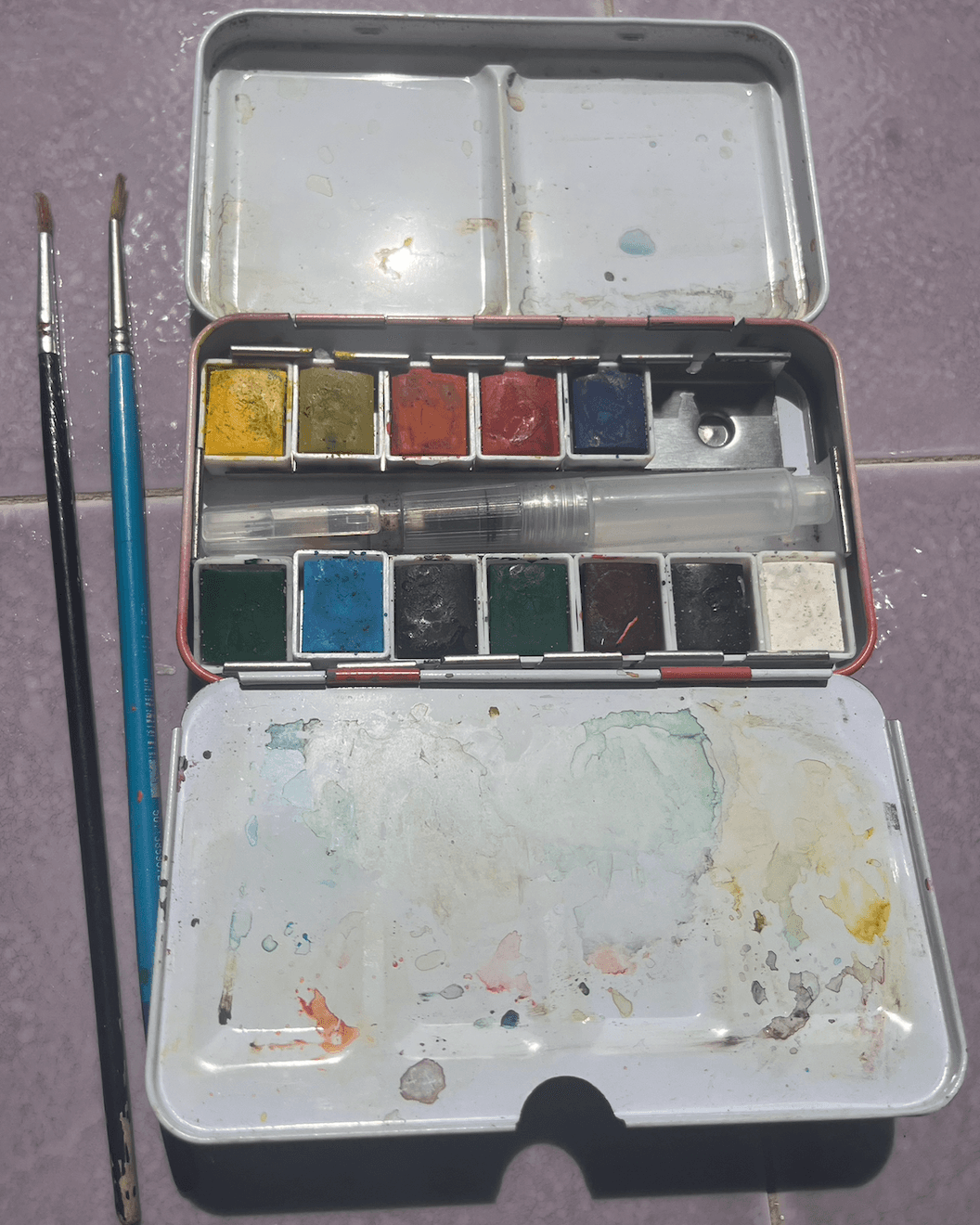
The kit itself is straightforward. I use the MEEDEN Travel Watercolour Set, which comes with everything you need except extra brushes. I'd recommend picking up a couple more separately, especially if you're painting with someone else. You'll also want watercolour cards. Buy them in bulk. Packs of 50 or 100 are ideal, because not every painting is going to be good and that's fine. Better to use up a card and move on than to be precious about it.
One last tip: once you're done, make sure to carry a few tissues to absorb any excess moisture you don't want.
What I Took Away
You don't need to be good at watercolours to enjoy it. You just need to show up with a brush, some water and a rough idea of what you're looking at.
What surprised me most was how technical it could be whilst still feeling accessible. Mixing colours on a palette, finding the right shade, building up layers. There's real craft in it, but the barrier to entry is low enough that a complete beginner can sit down and make something worth keeping.
Even with long gaps between sessions, I've noticed my skills improving over time. Progress is slow, but it's getting there. Each time I try it, I seem to develop a new style.
What I love most is what I end up with at the end of a trip. Not just photos, but small paintings made with the water from that place, on that day. They're imperfect and personal in a way that nothing else quite captures.
I also think it's one of the best things you can do with another person. Sitting side by side, painting the same view and ending up with two completely different interpretations of it. That's always interesting.
If you think you're not artistic enough, I'd say get the travel set anyway. Keep the cards cheap and plentiful. Let yourself make bad ones. The good ones will follow.
Special Thanks
To the team medic on the British Exploring Society expedition, for having the foresight to pack a watercolour set on a hiking trip. It started all of this.
To Ash, for the Italy paintings and the two pieces of advice that actually made a difference.
To Tom, for being up for sitting on a harbour wall in Montenegro and painting with me.
To MEEDEN, for making a travel set that's genuinely good and genuinely portable.
Watercolours
Key Summary
A travel watercolour set is one of the best things you can pack for a trip. Lightweight, compact and endlessly useful.
Start with light colours and build up. Going dark first makes it much harder to correct.
Landscapes are easier than people. Start there.
Outlining in pen before (or even after) you paint makes a big difference, especially as a beginner.
Buying watercolour cards in bulk takes the pressure off. Not every painting needs to be good.
Using water from the place you're painting adds something you can't get from a photo.
How It Started
This one started in Scotland, on a beautiful sunny day in the Highlands.
I was volunteering on an expedition with the British Exploring Society, leading a group of young explorers through a week of hiking and camping. During one of the days, one of the young people in our group needed a slower pace, so the team medic and I stayed with her while the rest of the group continued.
The medic had brought along a small travel watercolour set. To make the most of the afternoon, we headed down to a nearby stream and started painting. I don't know quite what I was expecting, but it was one of the most relaxing things I'd done in a long time. Sitting by a stream in the Scottish Highlands, painting the landscape around me, using the water from the stream itself to mix the colours.
I wanted to bring that feeling home with me.
I bought my own travel set shortly after, and it's been with me on almost every trip since.
My first attempt:
The Experience
The first proper outing was a few months later, when I spent a month working from Italy with my friend Ash. We did a lot of hiking, and somewhere between the monasteries and the mountain paths, we started painting.
Ash is a mechanical engineer and has a remarkably good eye. His paintings were detailed and realistic in a way mine weren't, and he taught me two things that changed how I approached it. Start with your lightest colours and build up. And don't be too obvious with the lines.
Mine on the left, Ash's on the right.
I'd been doing the opposite on both counts. Going in dark and then trying to lighten it, and outlining everything too heavily. Once I adjusted, the paintings started to feel more like watercolours and less like colouring-in.
In Montenegro, I tried a different approach entirely. Outlining the scene in pen first and then filling it in with paint. A kind of paint-by-numbers approach that I really liked the effect of. It gave the paintings more structure without losing the looseness that makes watercolours interesting.
One of the things I love most about painting this way is using the water from wherever I am. The stream in Scotland. The sea in Montenegro. The fountain at a monastery in Italy and by the beach in Thailand. It sounds like a small thing, but it adds a layer of memory to each painting that a photograph can't quite replicate.
The kit itself is straightforward. I use the MEEDEN Travel Watercolour Set, which comes with everything you need except extra brushes. I'd recommend picking up a couple more separately, especially if you're painting with someone else. You'll also want watercolour cards. Buy them in bulk. Packs of 50 or 100 are ideal, because not every painting is going to be good and that's fine. Better to use up a card and move on than to be precious about it.
One last tip: once you're done, make sure to carry a few tissues to absorb any excess moisture you don't want.
What I Took Away
You don't need to be good at watercolours to enjoy it. You just need to show up with a brush, some water and a rough idea of what you're looking at.
What surprised me most was how technical it could be whilst still feeling accessible. Mixing colours on a palette, finding the right shade, building up layers. There's real craft in it, but the barrier to entry is low enough that a complete beginner can sit down and make something worth keeping.
Even with long gaps between sessions, I've noticed my skills improving over time. Progress is slow, but it's getting there. Each time I try it, I seem to develop a new style.
What I love most is what I end up with at the end of a trip. Not just photos, but small paintings made with the water from that place, on that day. They're imperfect and personal in a way that nothing else quite captures.
I also think it's one of the best things you can do with another person. Sitting side by side, painting the same view and ending up with two completely different interpretations of it. That's always interesting.
If you think you're not artistic enough, I'd say get the travel set anyway. Keep the cards cheap and plentiful. Let yourself make bad ones. The good ones will follow.
Special Thanks
To the team medic on the British Exploring Society expedition, for having the foresight to pack a watercolour set on a hiking trip. It started all of this.
To Ash, for the Italy paintings and the two pieces of advice that actually made a difference.
To Tom, for being up for sitting on a harbour wall in Montenegro and painting with me.
To MEEDEN, for making a travel set that's genuinely good and genuinely portable.