Scuba Diving
Key Summary
A PADI Open Water qualification costs around £250, still relatively expensive but not the thousands I was expecting.
The number one rule of scuba diving is "just keep breathing'
The e-learning course is a significant commitment. Allow at least 2 full days.
Equalising your ears is one of the most important things to get right but there are lots of tricks to help. Don't rush the descent.
Scuba diving is surprisingly meditative.
Fog up your mask with spit or washing-up liquid before you go down. It works.
How It Started
Scuba diving had been on my bucket list for such a long time, it combines everything I love: swimming, animals and exploring.
I'd always been put off by the cost and the practicality of it. In my head, it was something that required thousands of pounds to qualify in and hundreds more every time you went down and I didn't think I'd be able to make use of the qualification too often.
I'd tried it twice before. Once in a swimming pool in the UK as a teenager, just a taster, which was fun but didn't go anywhere. And once at the Great Barrier Reef whilst I was working out in Australia, which turned out to be a more formative experience than I expected.
The first time I went down at the Great Barrier Reef, my mask steamed up almost immediately. I hadn't been warned about it, and I got really claustrophobic, not something I normally get. I really didn't enjoy that first dive.
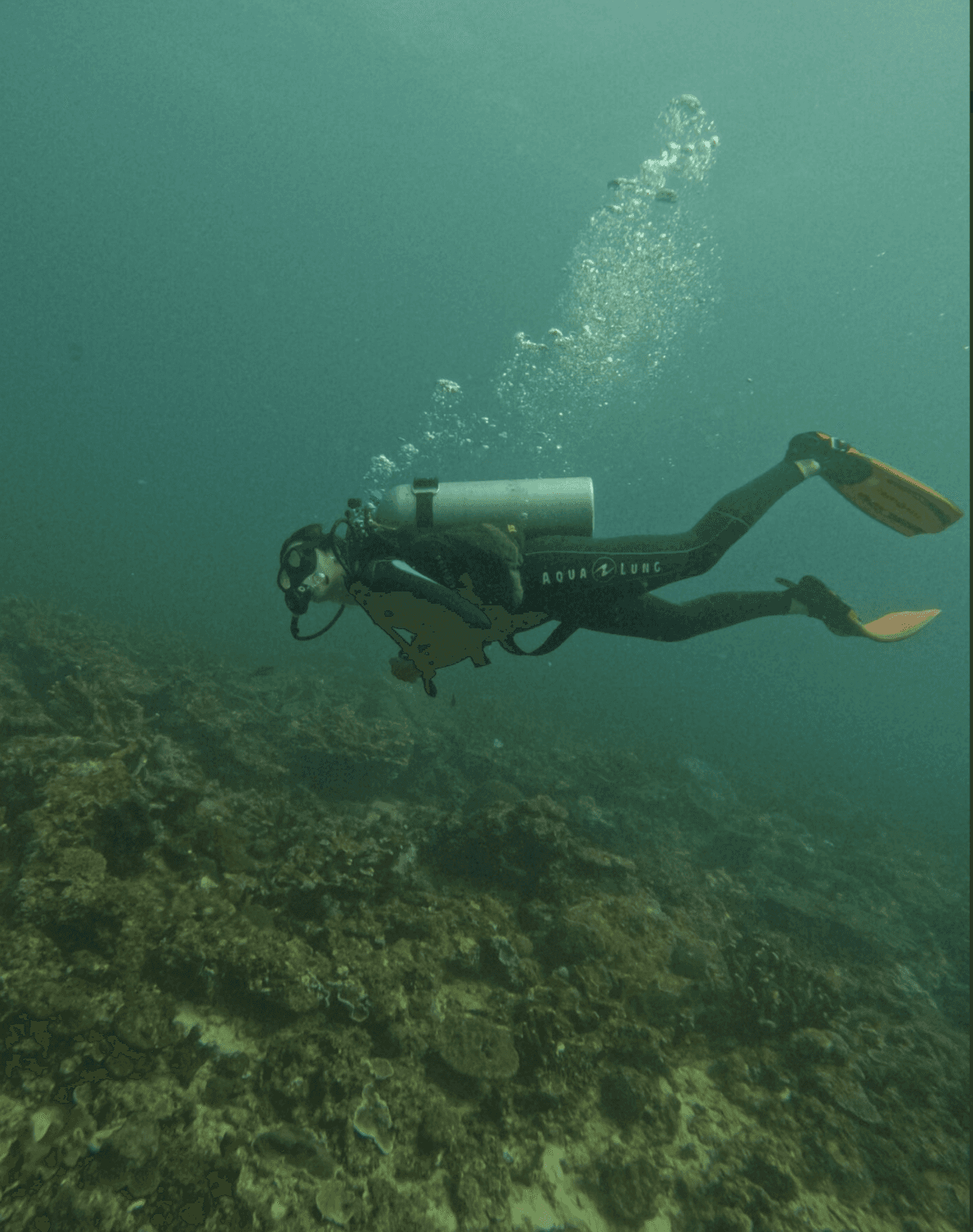
So much so, I debated whether to go down again. Luckily, I talked myself around with the thought I was only in Australia once and that I'd really regret not giving it another chance.
The second time, someone showed me the trick. Spit or washing-up liquid in the mask before you go in to stop them steaming up.This time I could see. I was even lucky enough to spot a few nursery sharks.
A few years later, I was working remotely in Southeast Asia for two and a half months over Christmas. During the trip, I found myself on Koh Rong Sanloem, a small island in Cambodia, staying in a secluded spot called Kamikoo on Sunset Beach.
After a week of relaxing, I was looking for something new to do. Some research later, I decided it was time to actually do it and put my money where my mouth was. I walked over to The Dive Shop and asked about a PADI. It was £250. Not the thousands I'd been imagining. I signed up the same day as a Christmas and birthday present from me to me.
The Experience
The first thing I had to get through was the theory.
The PADI Open Water e-learning takes around 12 to 15 hours to complete. On an island with barely any signal, it took me closer to 16 to 17 hours, spread across 2 full days. I sat from 8am through dinner both days, working through the material.
Some of it was common sense. Some of it was completely new. Buoyancy, pressure, equalisation. The kind of things that sound straightforward but take a while to actually understand.
Worth mentioning that before any of that, there was still a 40-minute walk through dense jungle to get to The Dive Shop and back again each day. Fun going in the morning, slightly less fun on the way back in the dark, dodging mosquitoes. It became something of an art form by the end.
I also had to pass a practical swim test before the pool sessions. What I was more focused on was equalisation. When I worked in the States, we used to run lifeguard drills where we'd have to deep dive quickly using just fins and a snorkel mask. People would regularly get ear infections or burst eardrums from not equalising properly under time pressure. Scuba diving gives you more time, but I went in knowing it was something to take seriously.
I did 4 training dives to qualify, at The Dive Shop on Koh Rong Sanloem:
Coral dive.
The Back Door.
Coral again.
Corner Bay.
On the first dive, we saw a pair of cuttlefish. But what I hadn't anticipated enjoying as much as I did was swimming through large shoals of fish. The way the light and colours catch them as they move around you is really cool.
The most surprising thing about diving properly was how meditative it was. No talking, just you, your buddy, your breathing and whatever is swimming past. Fish, it turns out, are largely unbothered by humans.
Once I qualified, I continued the trip to the Philippines. That's where my diving confidence really developed.
The sardine run at Panagsama House Reef in Moalboal was something I hadn't been prepared for; it was magical. I had no idea how close to shore they would be and how many turtles also hung out there, you had to be careful not to mistake it them for a rock as you paddled out to the ledge.
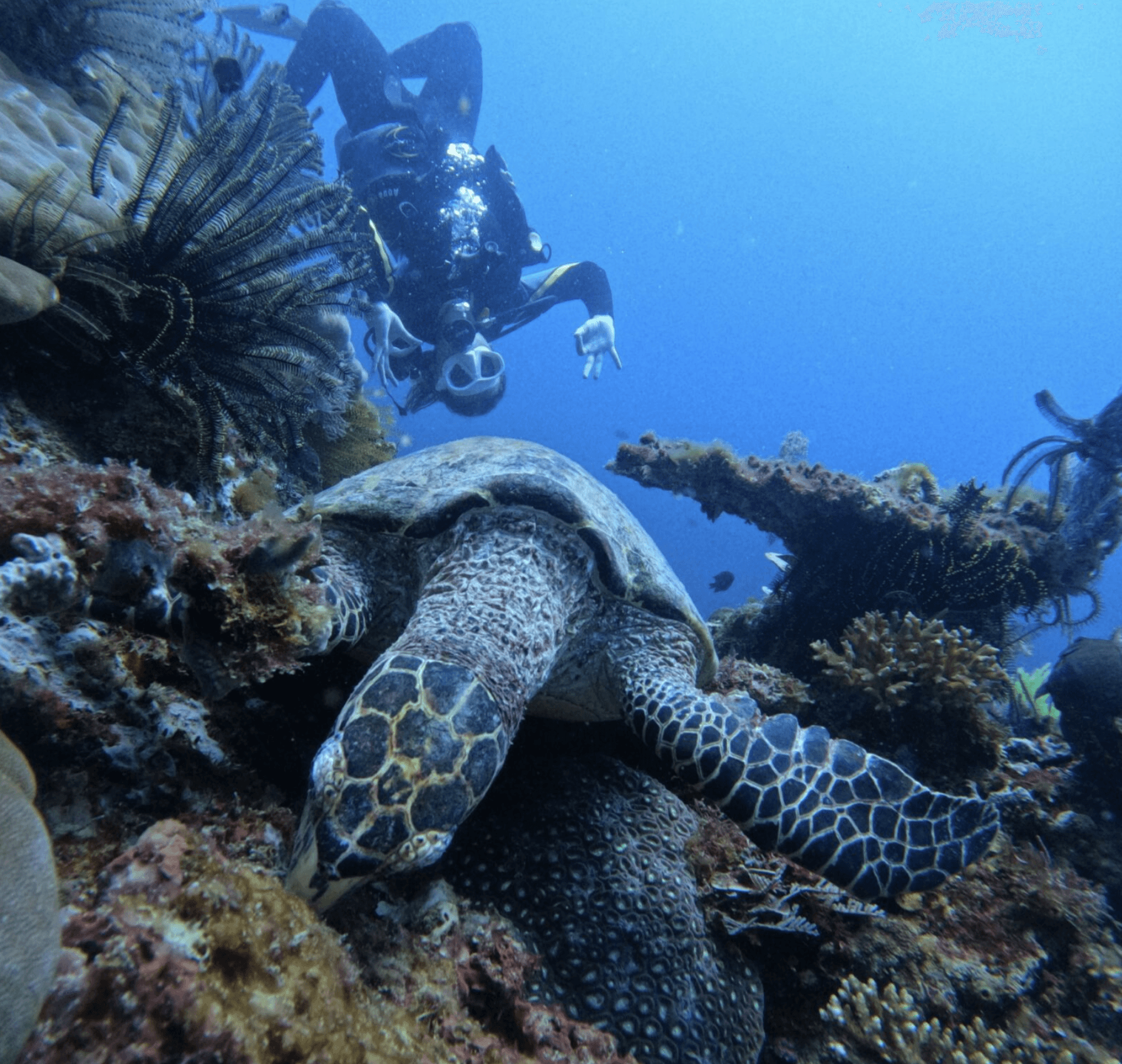
On my 31st birthday, I went to a local dive shop and asked about manta ray diving. They told me it was the wrong time of season and I had roughly a one-in-six chance of seeing one. I decided to go anyway.
On the second-to-last dive of the day, at a site called Nasan, I saw a manta ray.
I cried.
Rays have always been my favourite marine life. There's something about them that gives me a sense of calm I can't easily explain. Seeing something that size moving freely through the water and in the wild, even briefly, was way more emotional than I was expecting.
What I Took Away
Scuba diving has changed the way I think about travel.
It's now something I look into whenever I'm heading somewhere near the coast. A new way of seeing a place that most people don't get to experience.
It's also given me a greater appreciation for the ocean. How vast it is and how much is happening beneath the surface that most people never see.
The meditative quality of it surprised me most. There's very little that forces you to be as present as scuba diving. No distractions, no conversations, just breath and observation. I came back from every dive feeling noticeably calmer.
It also introduced me to some good people. The friends I made diving in the Philippines, working through shared fears and shared experiences, are some of the people I've stayed closest to from that trip.
Special Thanks
To Paul and the rest of the team at the Dive Shop on Koh Rong Sanloem, for making it accessible and enjoyable. A good place to learn. And all the subsequent dive shops and instructors in the Philippines, for the memorable dives.
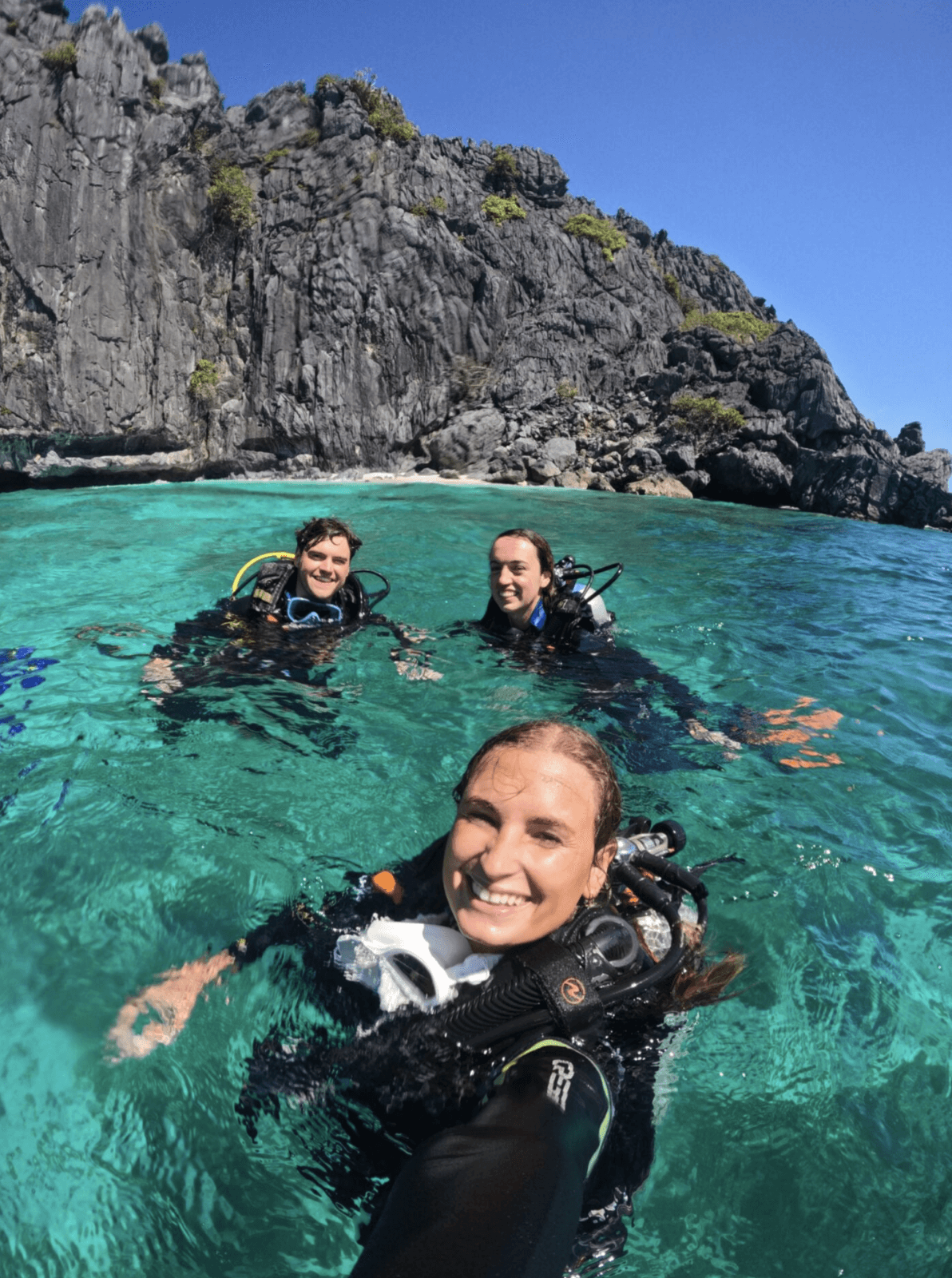
To the girls I met in the Philippines, for making that trip what it was
To the manta ray at Nasan, for showing up against all odds!
Scuba Diving
Key Summary
A PADI Open Water qualification costs around £250, still relatively expensive but not the thousands I was expecting.
The number one rule of scuba diving is "just keep breathing'
The e-learning course is a significant commitment. Allow at least 2 full days.
Equalising your ears is one of the most important things to get right but there are lots of tricks to help. Don't rush the descent.
Scuba diving is surprisingly meditative.
Fog up your mask with spit or washing-up liquid before you go down. It works.
How It Started
Scuba diving had been on my bucket list for such a long time, it combines everything I love: swimming, animals and exploring.
I'd always been put off by the cost and the practicality of it. In my head, it was something that required thousands of pounds to qualify in and hundreds more every time you went down and I didn't think I'd be able to make use of the qualification too often.
I'd tried it twice before. Once in a swimming pool in the UK as a teenager, just a taster, which was fun but didn't go anywhere. And once at the Great Barrier Reef whilst I was working out in Australia, which turned out to be a more formative experience than I expected.
The first time I went down at the Great Barrier Reef, my mask steamed up almost immediately. I hadn't been warned about it, and I got really claustrophobic, not something I normally get. I really didn't enjoy that first dive.
So much so, I debated whether to go down again. Luckily, I talked myself around with the thought I was only in Australia once and that I'd really regret not giving it another chance.
The second time, someone showed me the trick. Spit or washing-up liquid in the mask before you go in to stop them steaming up.This time I could see. I was even lucky enough to spot a few nursery sharks.
A few years later, I was working remotely in Southeast Asia for two and a half months over Christmas. During the trip, I found myself on Koh Rong Sanloem, a small island in Cambodia, staying in a secluded spot called Kamikoo on Sunset Beach.
After a week of relaxing, I was looking for something new to do. Some research later, I decided it was time to actually do it and put my money where my mouth was. I walked over to The Dive Shop and asked about a PADI. It was £250. Not the thousands I'd been imagining. I signed up the same day as a Christmas and birthday present from me to me.
The Experience
The first thing I had to get through was the theory.
The PADI Open Water e-learning takes around 12 to 15 hours to complete. On an island with barely any signal, it took me closer to 16 to 17 hours, spread across 2 full days. I sat from 8am through dinner both days, working through the material.
Some of it was common sense. Some of it was completely new. Buoyancy, pressure, equalisation. The kind of things that sound straightforward but take a while to actually understand.
Worth mentioning that before any of that, there was still a 40-minute walk through dense jungle to get to The Dive Shop and back again each day. Fun going in the morning, slightly less fun on the way back in the dark, dodging mosquitoes. It became something of an art form by the end.
I also had to pass a practical swim test before the pool sessions. What I was more focused on was equalisation. When I worked in the States, we used to run lifeguard drills where we'd have to deep dive quickly using just fins and a snorkel mask. People would regularly get ear infections or burst eardrums from not equalising properly under time pressure. Scuba diving gives you more time, but I went in knowing it was something to take seriously.
I did 4 training dives to qualify, at The Dive Shop on Koh Rong Sanloem:
Coral dive.
The Back Door.
Coral again.
Corner Bay.
On the first dive, we saw a pair of cuttlefish. But what I hadn't anticipated enjoying as much as I did was swimming through large shoals of fish. The way the light and colours catch them as they move around you is really cool.
The most surprising thing about diving properly was how meditative it was. No talking, just you, your buddy, your breathing and whatever is swimming past. Fish, it turns out, are largely unbothered by humans.
Once I qualified, I continued the trip to the Philippines. That's where my diving confidence really developed.
The sardine run at Panagsama House Reef in Moalboal was something I hadn't been prepared for; it was magical. I had no idea how close to shore they would be and how many turtles also hung out there, you had to be careful not to mistake it them for a rock as you paddled out to the ledge.
On my 31st birthday, I went to a local dive shop and asked about manta ray diving. They told me it was the wrong time of season and I had roughly a one-in-six chance of seeing one. I decided to go anyway.
On the second-to-last dive of the day, at a site called Nasan, I saw a manta ray.
I cried.
Rays have always been my favourite marine life. There's something about them that gives me a sense of calm I can't easily explain. Seeing something that size moving freely through the water and in the wild, even briefly, was way more emotional than I was expecting.
What I Took Away
Scuba diving has changed the way I think about travel.
It's now something I look into whenever I'm heading somewhere near the coast. A new way of seeing a place that most people don't get to experience.
It's also given me a greater appreciation for the ocean. How vast it is and how much is happening beneath the surface that most people never see.
The meditative quality of it surprised me most. There's very little that forces you to be as present as scuba diving. No distractions, no conversations, just breath and observation. I came back from every dive feeling noticeably calmer.
It also introduced me to some good people. The friends I made diving in the Philippines, working through shared fears and shared experiences, are some of the people I've stayed closest to from that trip.
Special Thanks
To Paul and the rest of the team at the Dive Shop on Koh Rong Sanloem, for making it accessible and enjoyable. A good place to learn. And all the subsequent dive shops and instructors in the Philippines, for the memorable dives.
To the girls I met in the Philippines, for making that trip what it was
To the manta ray at Nasan, for showing up against all odds!