Learn to Surf
Key Summary
Surfing is harder than it looks, even if you have a water sports background
The pop-up is a full-body movement using your arms, core and legs all at once
I found bigger waves easier to learn on than small ones
The swim back out to catch the next wave is just as much of a workout as the surfing itself
It's as much about reading the waves as it is about standing up
How It Started
Each year I bring all my friends together for a weekend of camping, hiking and a beach day. It was during one of these trips that I first gave surfing a proper go.
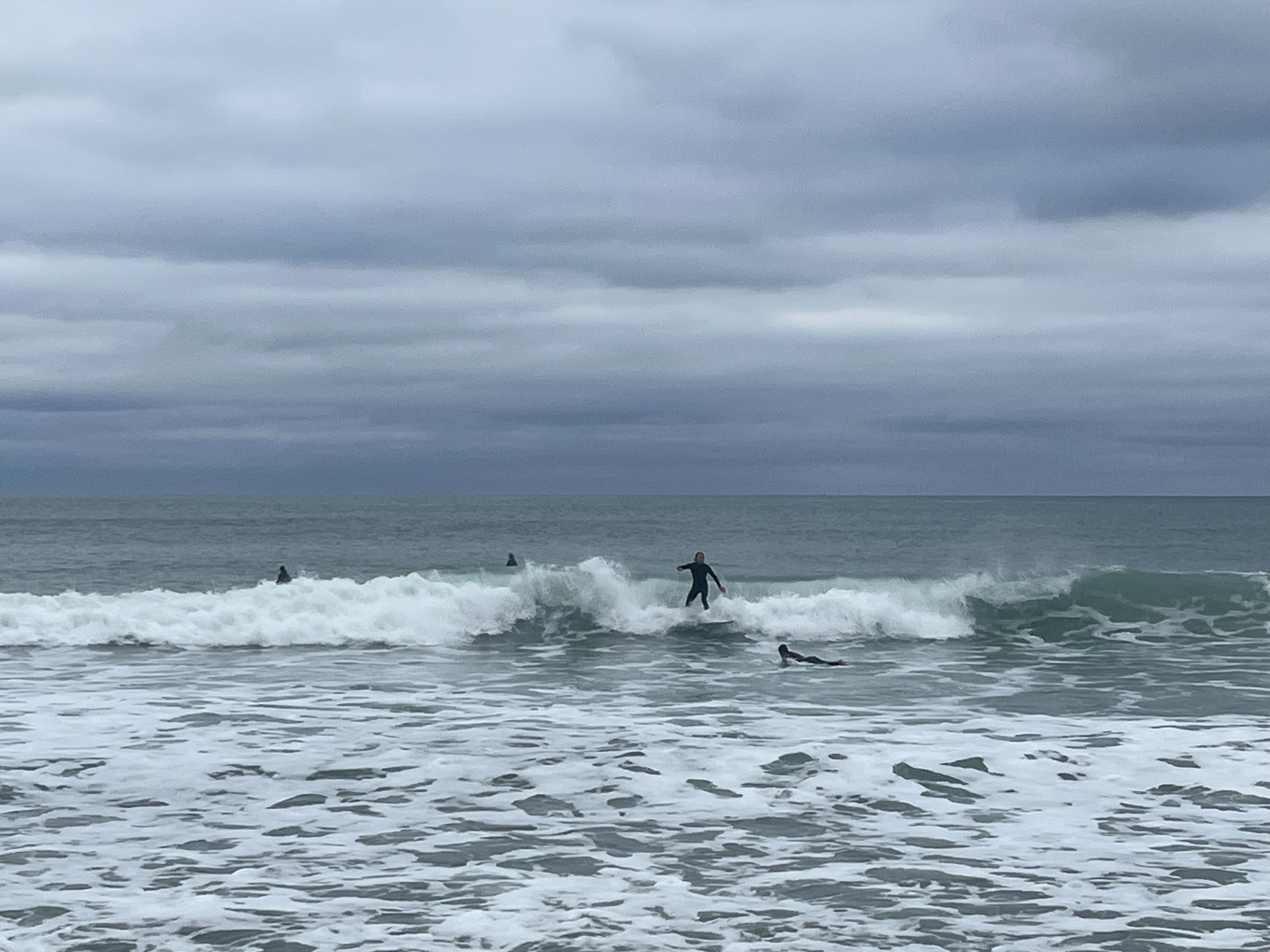
We were at Porthcawl, a small beach in Wales. One of those classic overcast and grey Welsh days where the sea looks uninviting but you get in anyway.
A few of the group were keen surfers, and it was easy enough for the rest of us to hire a board and a wetsuit for the day. With this skill, it was very much a case of learning by doing and failing quite a few times. As it turns out, that seems to be my best way of learning.
Having previously taught windsurfing in the States, I figured my skills would be mostly transferable. This was only partially true, and I got humbled pretty quickly on the first few waves.
If my snowboarding experience had taught me anything, though, being thrown in at the deep end was going to give me a much quicker learning curve than starting small ever would.
The Experience
The first thing you notice is how much effort goes into getting out to the waves in the first place. Paddling out through the waves is exhausting, and that's before you've even attempted to stand up.
The pop-up is the bit that catches most beginners out. You're lying flat on the board, the wave catches you, and you have a very small window to push yourself up, get your feet underneath you and find your balance. It's a full-body movement, and it happens fast. Getting the timing right is the hardest part.
I discovered that I ride goofy, right foot forward. Having windsurfed before, the stance you end up in feels familiar. For me, it was more getting up there in the first place that was the challenge.
It took me 6 or 7 attempts before I managed to stand up cleanly. Once you're up, though, it's a brilliant feeling. Especially after everything it took to get there.
I felt more at home on the mid-level board, half perspex and half foam, rather than the full beginner's board, which is very large and difficult to manoeuvre.
The biggest difference between surfing and windsurfing is time. With windsurfing, you have more time to get organised, get your foot placement right and bring the sail up. Surfing gives you none of that. The wave doesn't wait. You either pop up, or you don't.
By the end of the day, I was getting up consistently and making it all the way to the beach. I was also absolutely exhausted and freezing cold. Still, it was completely worth it.

What I Took Away
I was surprised at how much I enjoyed it. There's something about harnessing the power of a wave that's about to crash that's hard to replicate in other sports, and if you miss it, it truly feels like you're in a washing machine.
Each wave is slightly different, and when you're out there, you're fully in the moment. I still prefer windsurfing, but surfing has some really great qualities to it.
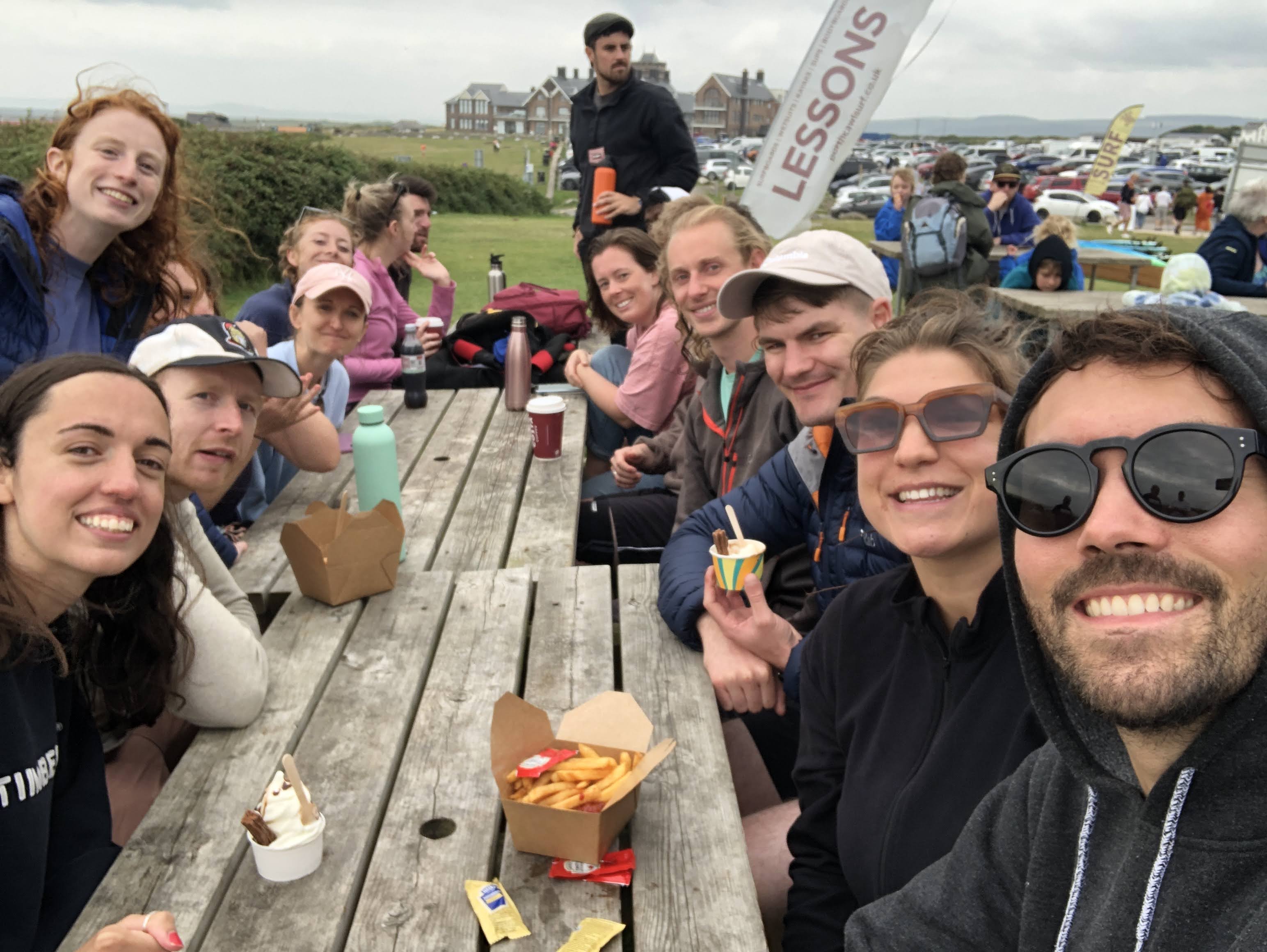
It's such a collaborative experience. The group of us were cheering each other on, sharing tips and laughing at the wipeouts. Learning to do something difficult with others really brings you together in a way that not many other activities do.
One thing that helped more than I expected was my ability to read the waves. It's quite an intuitive skill, and trusting yourself to know when the right moment to stand up is can be quite liberating. Once you stop overthinking it, everything else starts to fall into place.
The cold was the thing that got me towards the end, and if I'm honest, it's probably my biggest mental hurdle to going back.
That said, I have gone back a few times since. These days, I wear a pair of leggings and a rash vest underneath my wetsuit and switch to a thicker wetsuit, which has helped (although less so with the flexibility!).
If you're looking to learn to surf, especially in the South West, I'd really recommend Porthcawl as a beach. It's very beginner-friendly and accessible, and it's a really nice way of meeting new people. Plus, a great excuse to get some fish and chips and a hot drink after.
Special Thanks
To the group, for being the best people to fail miserably with and for cheering each other on through every wipeout.
To Porthcawl, for being a great place to give it a go! If you're thinking about trying surfing and you're based in the South West, it's well worth the trip.
Learn to Surf
Key Summary
Surfing is harder than it looks, even if you have a water sports background
The pop-up is a full-body movement using your arms, core and legs all at once
I found bigger waves easier to learn on than small ones
The swim back out to catch the next wave is just as much of a workout as the surfing itself
It's as much about reading the waves as it is about standing up
How It Started
Each year I bring all my friends together for a weekend of camping, hiking and a beach day. It was during one of these trips that I first gave surfing a proper go.
We were at Porthcawl, a small beach in Wales. One of those classic overcast and grey Welsh days where the sea looks uninviting but you get in anyway.
A few of the group were keen surfers, and it was easy enough for the rest of us to hire a board and a wetsuit for the day. With this skill, it was very much a case of learning by doing and failing quite a few times. As it turns out, that seems to be my best way of learning.
Having previously taught windsurfing in the States, I figured my skills would be mostly transferable. This was only partially true, and I got humbled pretty quickly on the first few waves.
If my snowboarding experience had taught me anything, though, being thrown in at the deep end was going to give me a much quicker learning curve than starting small ever would.
The Experience
The first thing you notice is how much effort goes into getting out to the waves in the first place. Paddling out through the waves is exhausting, and that's before you've even attempted to stand up.
The pop-up is the bit that catches most beginners out. You're lying flat on the board, the wave catches you, and you have a very small window to push yourself up, get your feet underneath you and find your balance. It's a full-body movement, and it happens fast. Getting the timing right is the hardest part.
I discovered that I ride goofy, right foot forward. Having windsurfed before, the stance you end up in feels familiar. For me, it was more getting up there in the first place that was the challenge.
It took me 6 or 7 attempts before I managed to stand up cleanly. Once you're up, though, it's a brilliant feeling. Especially after everything it took to get there.
I felt more at home on the mid-level board, half perspex and half foam, rather than the full beginner's board, which is very large and difficult to manoeuvre.
The biggest difference between surfing and windsurfing is time. With windsurfing, you have more time to get organised, get your foot placement right and bring the sail up. Surfing gives you none of that. The wave doesn't wait. You either pop up, or you don't.
By the end of the day, I was getting up consistently and making it all the way to the beach. I was also absolutely exhausted and freezing cold. Still, it was completely worth it.
What I Took Away
I was surprised at how much I enjoyed it. There's something about harnessing the power of a wave that's about to crash that's hard to replicate in other sports, and if you miss it, it truly feels like you're in a washing machine.
Each wave is slightly different, and when you're out there, you're fully in the moment. I still prefer windsurfing, but surfing has some really great qualities to it.
It's such a collaborative experience. The group of us were cheering each other on, sharing tips and laughing at the wipeouts. Learning to do something difficult with others really brings you together in a way that not many other activities do.
One thing that helped more than I expected was my ability to read the waves. It's quite an intuitive skill, and trusting yourself to know when the right moment to stand up is can be quite liberating. Once you stop overthinking it, everything else starts to fall into place.
The cold was the thing that got me towards the end, and if I'm honest, it's probably my biggest mental hurdle to going back.
That said, I have gone back a few times since. These days, I wear a pair of leggings and a rash vest underneath my wetsuit and switch to a thicker wetsuit, which has helped (although less so with the flexibility!).
If you're looking to learn to surf, especially in the South West, I'd really recommend Porthcawl as a beach. It's very beginner-friendly and accessible, and it's a really nice way of meeting new people. Plus, a great excuse to get some fish and chips and a hot drink after.
Special Thanks
To the group, for being the best people to fail miserably with and for cheering each other on through every wipeout.
To Porthcawl, for being a great place to give it a go! If you're thinking about trying surfing and you're based in the South West, it's well worth the trip.