Learn Spanish
Key Summary
Spanish is one of the most widely spoken languages in the world, covering multiple continents.
Immersion is the fastest way to learn, even if it's uncomfortable at first.
Duolingo is great for consistency, less so for grammar and fluency.
You don't need to be perfect to connect with people. Most will appreciate you trying.
The confidence to speak badly is more valuable than perfect grammar.
Learning Spanish never really ends, and once you accept that, it becomes a lot more enjoyable.
How It Started
I've always had an affinity with Spanish culture and way of life. There's something about the food, the pace and the warmth of the people that I find hard to explain.
One day, I'd love to live and work in Spain for a few months, and being able to speak the language properly feels like a big part of that dream.
I also have a lot of friends from Colombia, Spain and Argentina, and there's always been a part of me that wanted to communicate with them in their own language rather than defaulting to English.
Spanish also has a beautiful relationship with other Romance languages. A lot of vocabulary crosses over, which means learning it gives you a head start on Italian, Portuguese and others too.
I first started learning about 9 years ago, mainly through Duolingo. Before that, the only language I'd studied was a single year of French at school, which, let's be honest, didn't stick.
When I was living in New Zealand, I ended up sharing a hostel with 12 Argentinians and living with them for 9 months. At that point, I knew virtually no Spanish at all, so I really had to learn on the job. I'd spend evenings flicking through books and attempting very broken Spanish with the people I was living with, who were kind enough to play along. It was embarrassing, humbling and one of the best things that could have happened to my Spanish.
The Experience
Over the years, I've approached learning Spanish in a few different ways, and I think each one has taught me something different.
Duolingo
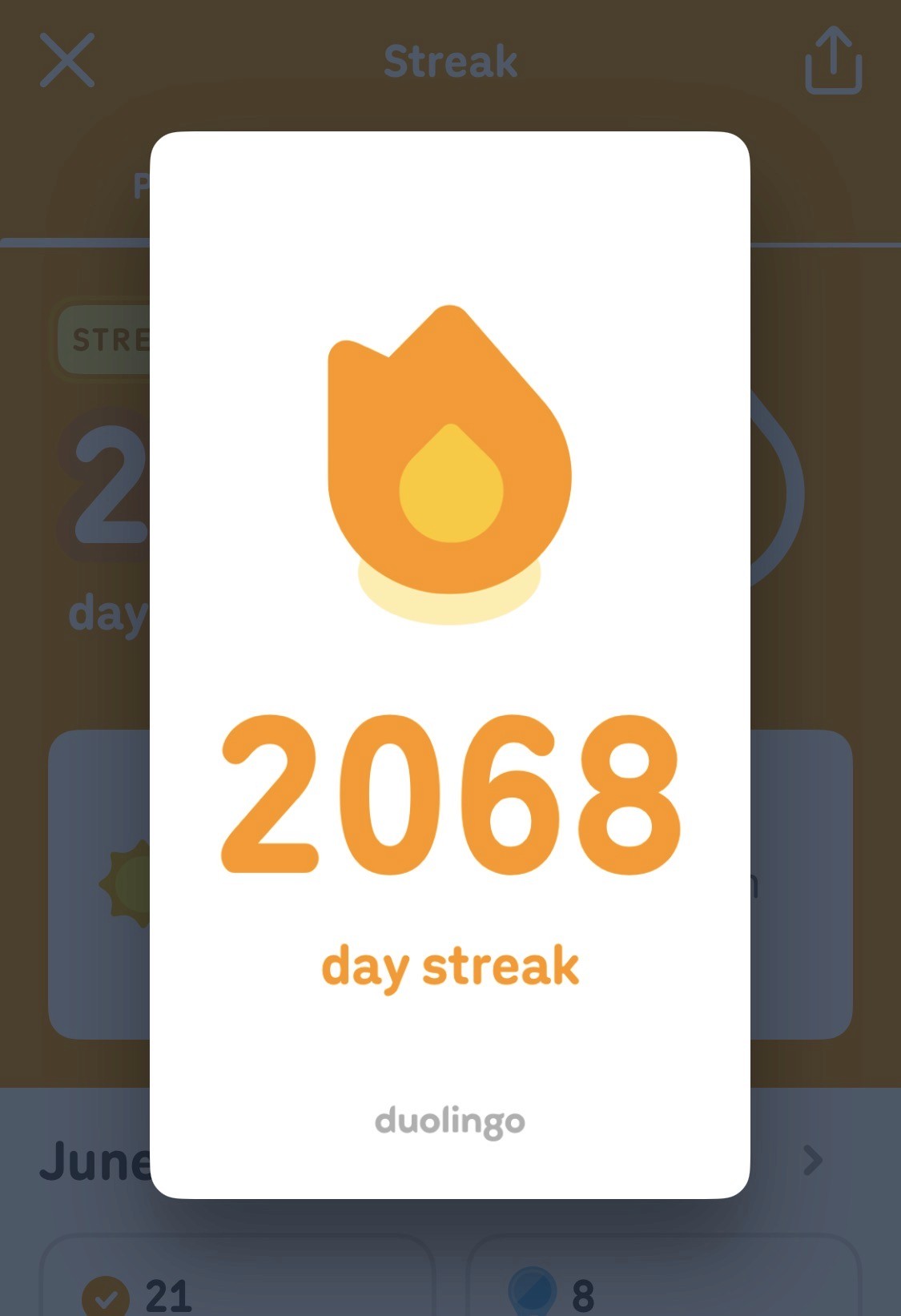
I've been using Duolingo on and off for about 9 years now. It's brilliant for building vocabulary, and the nagging owl is surprisingly effective at keeping your streak going. What it's less good at is grammar and the kind of nuanced understanding you need to actually hold a conversation. I'd say it's a great starting point and a good way to stay consistent, but if fluency is the goal, it's probably not enough on its own.
Lunchtime Spanish Classes
I took part in 8 weeks of online lunchtime Spanish classes, which were a completely different experience. Learning alongside others who were also figuring it out was really useful. People approach the language differently and come up with questions or ways of thinking about it that I wouldn't have thought of on my own. One thing I will say is that my brain felt absolutely knackered after each session. Learning a language is genuinely tiring, and it really made me appreciate what bilingual people and those who speak in their non-native tongue go through every day.
Full Immersion
For me, this has always been the most effective method. Whether that was living with the Argentinians in New Zealand, travelling in Spain, or deliberately seeking out situations where English wasn't an option. When you don't have a fallback, you find a way. It's not always comfortable, but it works.
One tip that massively helped me was learning how to say "how do you say...?" in Spanish as early as possible. Or even better, "What's the word similar to...?" It means you can practise similar vocabulary whilst also working towards finding the right word, and it keeps the conversation going in Spanish rather than reverting to English every time you get stuck. A small thing that makes a big difference.
Passive Immersion
One of the easiest ways to keep Spanish ticking over without it feeling like study is to bring it into your daily life in small ways. I listen to Spanish music and podcasts, watch TV shows with Spanish audio, and read books in Spanish where I can. There's also an app called Toucan that's worth knowing about. It works as a browser extension and subtly replaces a few words on the pages you're already reading with their Spanish equivalent, so you're picking up vocabulary without even trying. It's a small thing, but over time it adds up.
Preply
More recently, I've been using Preply, a platform where you can find one-to-one tutors from as little as a few pounds a session. What I really like about it is that you're not limited to mainland Spanish. I managed to find an Argentinian tutor, who was much closer to the Spanish I'd grown up learning and felt a lot more natural to me. The quality of tutors does vary, so it's worth trying a few before you settle on someone, but when you find the right fit, it makes a real difference. Having someone who can correct your grammar in real time and tailor the lesson to exactly where you are is something no app can replicate.
What I Took Away
One of the things that surprised me most about learning Spanish is how much it has changed the way I think. Not just about language, but about communication, culture and the effort that goes into being understood in a tongue that isn't your own.
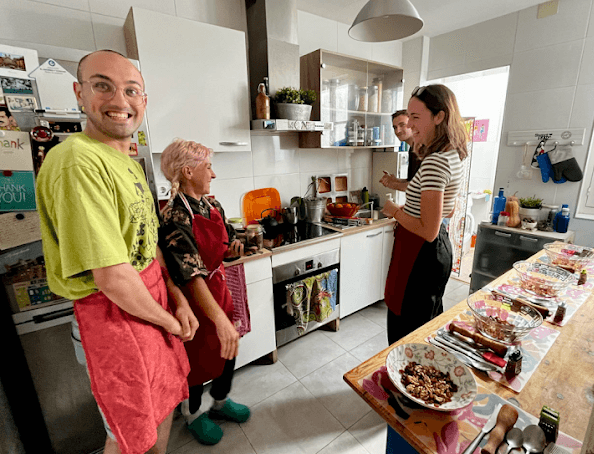
My Spanish still fluctuates. When I don't use it, I lose it, which I know is very common. I can get by out and about in Spain, order food, hold basic conversations, and the highlight for me was managing to translate an entire cooking class in Spain when the teacher didn't speak any English.
I understand more than I can speak, but I still get tripped up by the tenses and the masculine and feminine of words. I'd say I'm currently at a B1 level, but definitely a lot better once I'm in a Spanish-speaking country, fully immersed in the language again.
One of the things I've genuinely enjoyed is how different Spanish can be depending on where it's spoken. Colombian, Argentinian and mainland Spanish all vary quite a bit in vocabulary, pronunciation and rhythm. Having learned from a mix of all three, I don't have one core Spanish, which has its pros and cons. I might be correct in Argentinian Spanish and technically wrong in mainland Spanish, but people can understand me, and that's ultimately the point.
The biggest lesson has been that you don't have to be perfect to connect. Most people appreciate you trying, even if it's not quite right. The confidence to speak badly is more valuable than the ability to speak perfectly in your head but never out loud. And don't underestimate the power of body language either. I've had many a conversation that was 80% body language and 20% words, and it felt just as natural as if I were fluent. Sometimes communication is less about the language and more about the connection.
This project was also one of the hardest to know when to call finished. How do you know when you've learned a language? Even my English isn't perfect, and that's my native tongue. What I decided was that the cooking class moment was my marker. That was when I had what I wanted from the project. Everything from here is ongoing practice, and I'm more than happy with that.
Special Thanks
To the 12 Argentinians in that New Zealand hostel, for putting up with my very broken Spanish and being patient enough to help me improve.
To Duolingo, for the consistency, the streaks and the nagging owl that I have a love-hate relationship with.
To Preply, for making it possible to find a tutor that fits your level, your dialect and your budget.
To Toucan, for the sneaky vocabulary top-ups while I'm just trying to browse the internet. (At one stage, you could "own" a word on the app, and because of that, pingüino, which means penguin, is still my favourite Spanish word.)
Learn Spanish
Key Summary
Spanish is one of the most widely spoken languages in the world, covering multiple continents.
Immersion is the fastest way to learn, even if it's uncomfortable at first.
Duolingo is great for consistency, less so for grammar and fluency.
You don't need to be perfect to connect with people. Most will appreciate you trying.
The confidence to speak badly is more valuable than perfect grammar.
Learning Spanish never really ends, and once you accept that, it becomes a lot more enjoyable.
How It Started
I've always had an affinity with Spanish culture and way of life. There's something about the food, the pace and the warmth of the people that I find hard to explain.
One day, I'd love to live and work in Spain for a few months, and being able to speak the language properly feels like a big part of that dream.
I also have a lot of friends from Colombia, Spain and Argentina, and there's always been a part of me that wanted to communicate with them in their own language rather than defaulting to English.
Spanish also has a beautiful relationship with other Romance languages. A lot of vocabulary crosses over, which means learning it gives you a head start on Italian, Portuguese and others too.
I first started learning about 9 years ago, mainly through Duolingo. Before that, the only language I'd studied was a single year of French at school, which, let's be honest, didn't stick.
When I was living in New Zealand, I ended up sharing a hostel with 12 Argentinians and living with them for 9 months. At that point, I knew virtually no Spanish at all, so I really had to learn on the job. I'd spend evenings flicking through books and attempting very broken Spanish with the people I was living with, who were kind enough to play along. It was embarrassing, humbling and one of the best things that could have happened to my Spanish.
The Experience
Over the years, I've approached learning Spanish in a few different ways, and I think each one has taught me something different.
Duolingo
I've been using Duolingo on and off for about 9 years now. It's brilliant for building vocabulary, and the nagging owl is surprisingly effective at keeping your streak going. What it's less good at is grammar and the kind of nuanced understanding you need to actually hold a conversation. I'd say it's a great starting point and a good way to stay consistent, but if fluency is the goal, it's probably not enough on its own.
Lunchtime Spanish Classes
I took part in 8 weeks of online lunchtime Spanish classes, which were a completely different experience. Learning alongside others who were also figuring it out was really useful. People approach the language differently and come up with questions or ways of thinking about it that I wouldn't have thought of on my own. One thing I will say is that my brain felt absolutely knackered after each session. Learning a language is genuinely tiring, and it really made me appreciate what bilingual people and those who speak in their non-native tongue go through every day.
Full Immersion
For me, this has always been the most effective method. Whether that was living with the Argentinians in New Zealand, travelling in Spain, or deliberately seeking out situations where English wasn't an option. When you don't have a fallback, you find a way. It's not always comfortable, but it works.
One tip that massively helped me was learning how to say "how do you say...?" in Spanish as early as possible. Or even better, "What's the word similar to...?" It means you can practise similar vocabulary whilst also working towards finding the right word, and it keeps the conversation going in Spanish rather than reverting to English every time you get stuck. A small thing that makes a big difference.
Passive Immersion
One of the easiest ways to keep Spanish ticking over without it feeling like study is to bring it into your daily life in small ways. I listen to Spanish music and podcasts, watch TV shows with Spanish audio, and read books in Spanish where I can. There's also an app called Toucan that's worth knowing about. It works as a browser extension and subtly replaces a few words on the pages you're already reading with their Spanish equivalent, so you're picking up vocabulary without even trying. It's a small thing, but over time it adds up.
Preply
More recently, I've been using Preply, a platform where you can find one-to-one tutors from as little as a few pounds a session. What I really like about it is that you're not limited to mainland Spanish. I managed to find an Argentinian tutor, who was much closer to the Spanish I'd grown up learning and felt a lot more natural to me. The quality of tutors does vary, so it's worth trying a few before you settle on someone, but when you find the right fit, it makes a real difference. Having someone who can correct your grammar in real time and tailor the lesson to exactly where you are is something no app can replicate.
What I Took Away
One of the things that surprised me most about learning Spanish is how much it has changed the way I think. Not just about language, but about communication, culture and the effort that goes into being understood in a tongue that isn't your own.
My Spanish still fluctuates. When I don't use it, I lose it, which I know is very common. I can get by out and about in Spain, order food, hold basic conversations, and the highlight for me was managing to translate an entire cooking class in Spain when the teacher didn't speak any English.
I understand more than I can speak, but I still get tripped up by the tenses and the masculine and feminine of words. I'd say I'm currently at a B1 level, but definitely a lot better once I'm in a Spanish-speaking country, fully immersed in the language again.
One of the things I've genuinely enjoyed is how different Spanish can be depending on where it's spoken. Colombian, Argentinian and mainland Spanish all vary quite a bit in vocabulary, pronunciation and rhythm. Having learned from a mix of all three, I don't have one core Spanish, which has its pros and cons. I might be correct in Argentinian Spanish and technically wrong in mainland Spanish, but people can understand me, and that's ultimately the point.
The biggest lesson has been that you don't have to be perfect to connect. Most people appreciate you trying, even if it's not quite right. The confidence to speak badly is more valuable than the ability to speak perfectly in your head but never out loud. And don't underestimate the power of body language either. I've had many a conversation that was 80% body language and 20% words, and it felt just as natural as if I were fluent. Sometimes communication is less about the language and more about the connection.
This project was also one of the hardest to know when to call finished. How do you know when you've learned a language? Even my English isn't perfect, and that's my native tongue. What I decided was that the cooking class moment was my marker. That was when I had what I wanted from the project. Everything from here is ongoing practice, and I'm more than happy with that.
Special Thanks
To the 12 Argentinians in that New Zealand hostel, for putting up with my very broken Spanish and being patient enough to help me improve.
To Duolingo, for the consistency, the streaks and the nagging owl that I have a love-hate relationship with.
To Preply, for making it possible to find a tutor that fits your level, your dialect and your budget.
To Toucan, for the sneaky vocabulary top-ups while I'm just trying to browse the internet. (At one stage, you could "own" a word on the app, and because of that, pingüino, which means penguin, is still my favourite Spanish word.)