Glassblowing at Bristol Blue Glass
Key Summary
Glassblowing is one of the world's oldest craft traditions, dating back to the 1st century BC
It takes 7 to 8 years to learn glassblowing competently
There are 3 furnaces involved in the process, not just 1
The molten glass in the furnace reaches temperatures of around 1,090°C, roughly the same as volcanic lava
Bristol Blue Glass is one of the last remaining places in the country keeping this tradition alive
How It Started
Bristol Blue Glass is a studio on Bath Road in Brislington, and it's not somewhere you'd necessarily stumble across by accident.
We went down to see how baubles are made and to have a go ourselves.
I didn't really know what to expect going in.
I knew glassblowing was a craft that took years to master, but I hadn't appreciated quite how specialised or competitive the space was to get into.
There are very few glassblowing studios in the country, and a lot of artists are trying to get their foot in the door.
I also hadn't appreciated just how close this particular tradition had come to disappearing entirely. When Bristol Blue Glass was founded in 1988, the art of making free-blown handmade glassware had almost died out in Britain, with reportedly only 1 person left in the country who could still do it.
The Experience
Walking in, the first thing you notice is the heat.
We were there to blow our own glass baubles, guided by the team at Bristol Blue Glass. The experience involves watching at first, before having a go yourself.
The studio is built around 3 furnaces, each with a very specific job:
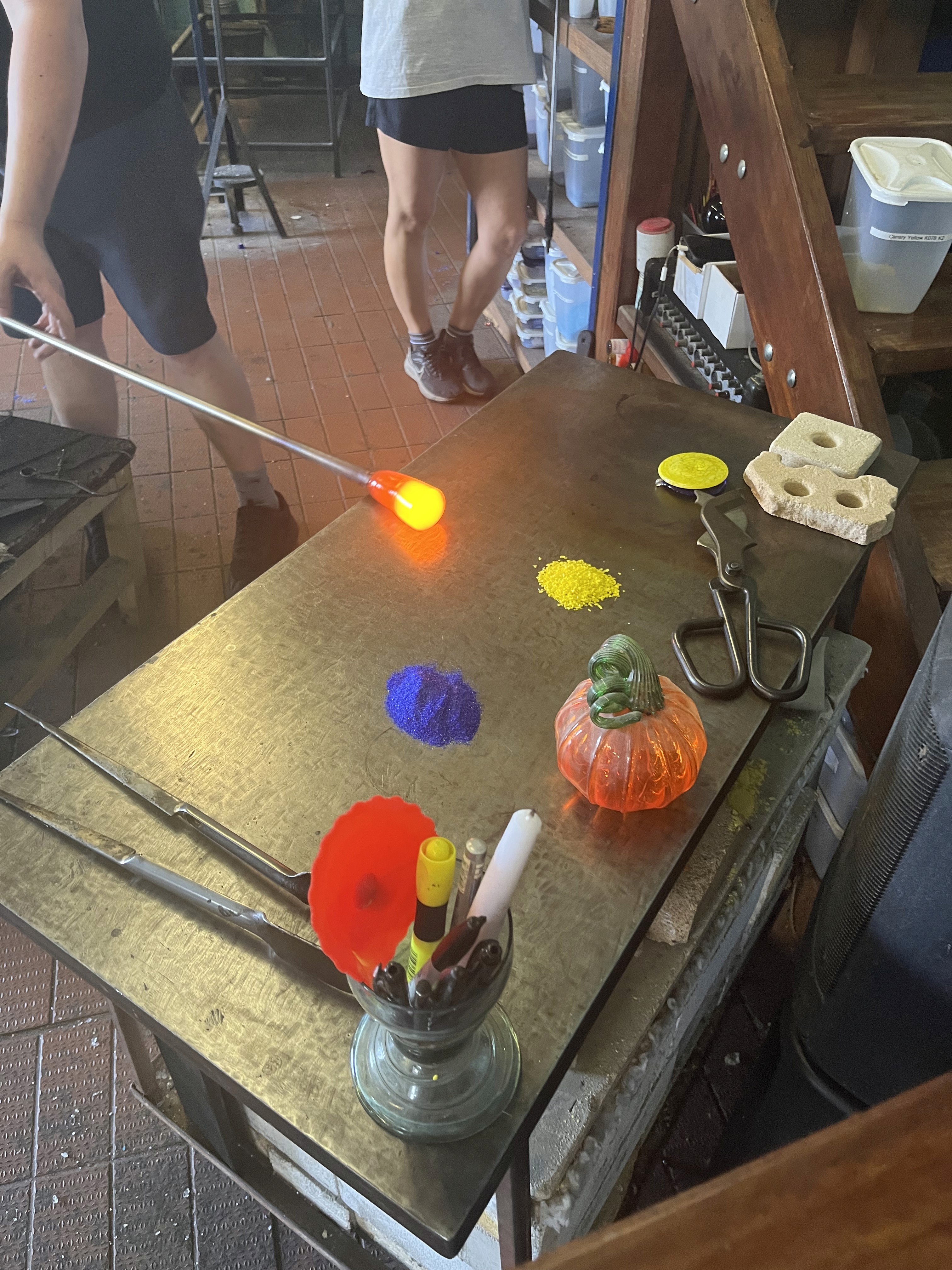
The furnace: holds the molten glass. Using the blowpipe, you pick it up and can begin shaping. At this stage, the glass glows a deep orange.
The "glory hole": a separate furnace used to reheat the piece between shaping steps, ensuring the glass doesn't get too brittle.
The "annealer": cools the glass slowly overnight to prevent it from cracking.
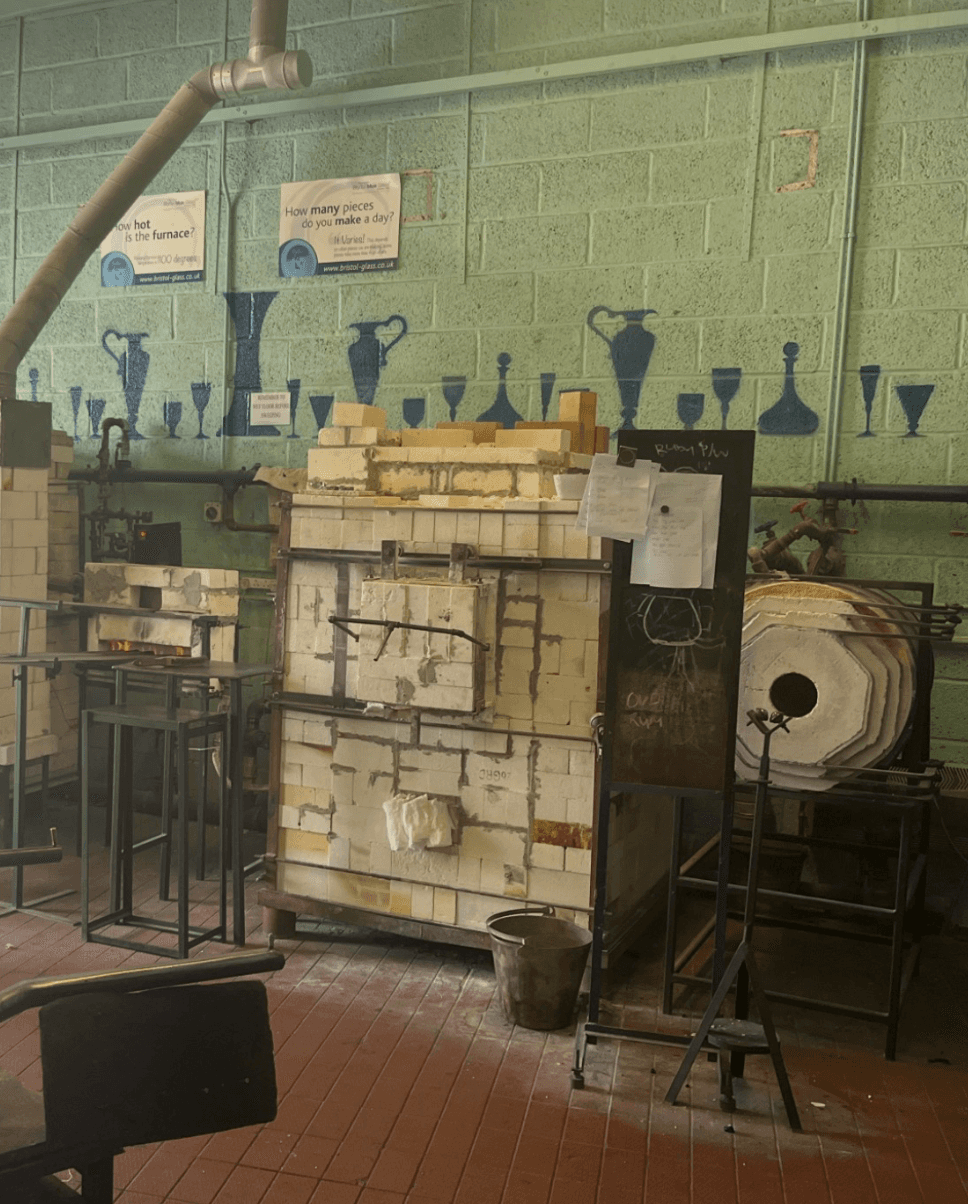
Watching the team work before having a go really helped. You get a much better sense of what you're actually supposed to be doing and what good looks like before you step up for yourself.
We also got to choose our colours and the effect we wanted. Using glass shards, known as frit, we could create dotted effects on the bauble, or we could use glass rods, known as cane, to create a striped effect. Each piece ends up unique as a result.
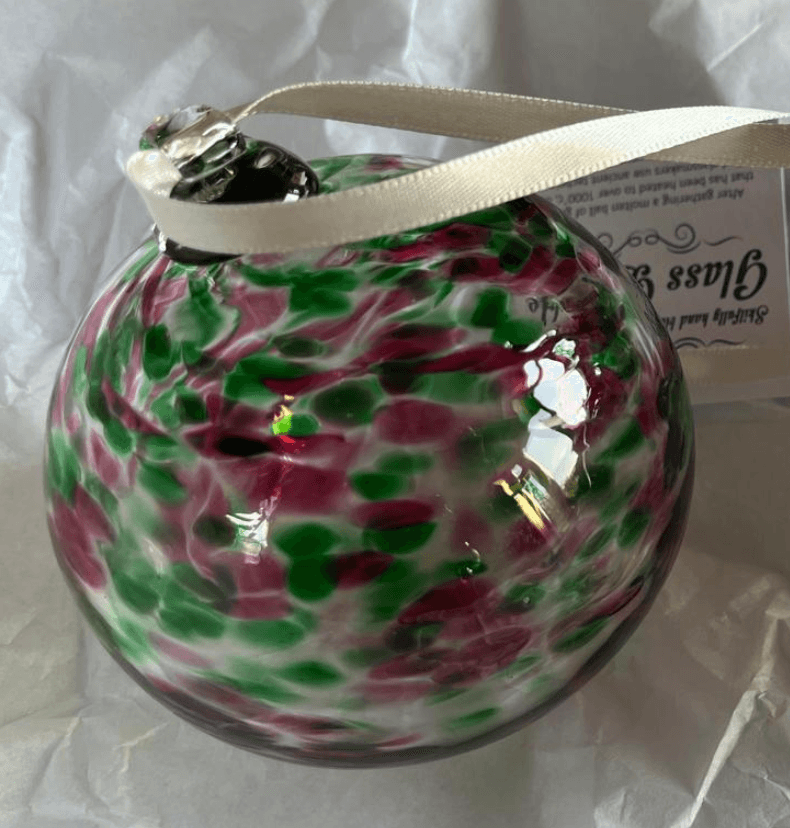
I decided to go for green and purple dots.
When our turn came, the glass was already gathered and ready on the blowpipe.
All we had to do was blow.
And honestly? It was a little anticlimactic, but not in a bad way. I thought there might be more heat involved in blowing through the tube. The trick is one long, slow, steady breath. The steadier you are, the better the result. It's technique over strength.
There are 2 main methods of glassblowing:
Free-blowing: where the glass is shaped purely by breath and hand
Mould-blowing: where a mould is used to form the shape
What we did was a simplified version of free-blowing, with the team doing the heavy lifting.
The bauble, when it arrived, was much more colourful than I expected. The green and purple worked really nicely together. I have it hanging above my desk and really enjoy looking at it.
What I Took Away
Watching the team work, it's clear just how much skill goes into it. Seeing them bring glass sculptures to life, including glass horses, was genuinely humbling. It takes 7 to 8 years to learn glassblowing competently, and even then, the learning never stops.
Glassblowing dates back to the 1st century BC, and its history is as fascinating as the craft itself. In Venice, glassmakers were so valued, and their techniques so guarded, that they were confined to the island of Murano to prevent their secrets from spreading.
Bristol has its own remarkable chapter in that story. Bristol blue glass has been made in the city since the 18th century, with its distinctive deep colour coming from cobalt oxide imported from Saxony.
At its peak, Bristol had over 17 glasshouses producing it. Production stopped in the early 1920s and only resumed in 1988, when Bristol Blue Glass was founded with reportedly only 1 person left in the country who could still make free-blown handmade glassware.
It made me think about how much we take crafts like this for granted.
Special Thanks
To Bristol Blue Glass, for keeping this tradition alive and for making it accessible to complete beginners. If you're in Bristol and curious, the bauble-blowing experience is £25, and entry to watch the glassblowers at work is completely free. You can find them at 357-359 Bath Road, Brislington, Bristol, or visit bristol-glass.co.uk.
Glassblowing at Bristol Blue Glass
Key Summary
Glassblowing is one of the world's oldest craft traditions, dating back to the 1st century BC
It takes 7 to 8 years to learn glassblowing competently
There are 3 furnaces involved in the process, not just 1
The molten glass in the furnace reaches temperatures of around 1,090°C, roughly the same as volcanic lava
Bristol Blue Glass is one of the last remaining places in the country keeping this tradition alive
How It Started
Bristol Blue Glass is a studio on Bath Road in Brislington, and it's not somewhere you'd necessarily stumble across by accident.
We went down to see how baubles are made and to have a go ourselves.
I didn't really know what to expect going in.
I knew glassblowing was a craft that took years to master, but I hadn't appreciated quite how specialised or competitive the space was to get into.
There are very few glassblowing studios in the country, and a lot of artists are trying to get their foot in the door.
I also hadn't appreciated just how close this particular tradition had come to disappearing entirely. When Bristol Blue Glass was founded in 1988, the art of making free-blown handmade glassware had almost died out in Britain, with reportedly only 1 person left in the country who could still do it.
The Experience
Walking in, the first thing you notice is the heat.
We were there to blow our own glass baubles, guided by the team at Bristol Blue Glass. The experience involves watching at first, before having a go yourself.
The studio is built around 3 furnaces, each with a very specific job:
The furnace: holds the molten glass. Using the blowpipe, you pick it up and can begin shaping. At this stage, the glass glows a deep orange.
The "glory hole": a separate furnace used to reheat the piece between shaping steps, ensuring the glass doesn't get too brittle.
The "annealer": cools the glass slowly overnight to prevent it from cracking.
Watching the team work before having a go really helped. You get a much better sense of what you're actually supposed to be doing and what good looks like before you step up for yourself.
We also got to choose our colours and the effect we wanted. Using glass shards, known as frit, we could create dotted effects on the bauble, or we could use glass rods, known as cane, to create a striped effect. Each piece ends up unique as a result.
I decided to go for green and purple dots.
When our turn came, the glass was already gathered and ready on the blowpipe.
All we had to do was blow.
And honestly? It was a little anticlimactic, but not in a bad way. I thought there might be more heat involved in blowing through the tube. The trick is one long, slow, steady breath. The steadier you are, the better the result. It's technique over strength.
There are 2 main methods of glassblowing:
Free-blowing: where the glass is shaped purely by breath and hand
Mould-blowing: where a mould is used to form the shape
What we did was a simplified version of free-blowing, with the team doing the heavy lifting.
The bauble, when it arrived, was much more colourful than I expected. The green and purple worked really nicely together. I have it hanging above my desk and really enjoy looking at it.
What I Took Away
Watching the team work, it's clear just how much skill goes into it. Seeing them bring glass sculptures to life, including glass horses, was genuinely humbling. It takes 7 to 8 years to learn glassblowing competently, and even then, the learning never stops.
Glassblowing dates back to the 1st century BC, and its history is as fascinating as the craft itself. In Venice, glassmakers were so valued, and their techniques so guarded, that they were confined to the island of Murano to prevent their secrets from spreading.
Bristol has its own remarkable chapter in that story. Bristol blue glass has been made in the city since the 18th century, with its distinctive deep colour coming from cobalt oxide imported from Saxony.
At its peak, Bristol had over 17 glasshouses producing it. Production stopped in the early 1920s and only resumed in 1988, when Bristol Blue Glass was founded with reportedly only 1 person left in the country who could still make free-blown handmade glassware.
It made me think about how much we take crafts like this for granted.
Special Thanks
To Bristol Blue Glass, for keeping this tradition alive and for making it accessible to complete beginners. If you're in Bristol and curious, the bauble-blowing experience is £25, and entry to watch the glassblowers at work is completely free. You can find them at 357-359 Bath Road, Brislington, Bristol, or visit bristol-glass.co.uk.